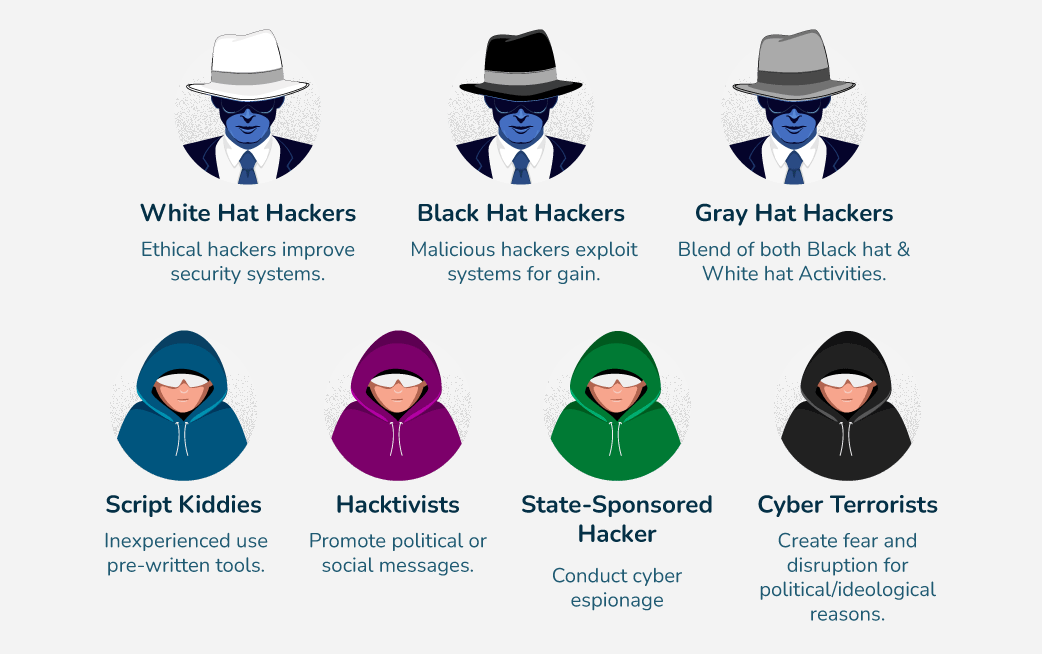
A Hacker is a person who is intensely interested in the mysterious workings of any computer operating system. Hackers are most often programmers. They gather advanced knowledge of operating systems and programming languages and discover loopholes within systems and the reasons for such loopholes. In this article, we will learn about all types of hackers, the Difference between White, Black, and Grey hat hackers, and ways to protect against them.
What are The Three Main Types of Hackers?
White Hat Hackers
White hat hackers are authorized or certified hackers who work for the government and organizations by performing penetration testing and identifying loopholes in cybersecurity. They ensure protection from malicious cybercrimes. They are also called Ethical Hackers or Cybersecurity Experts.
Black Hat Hackers
Also called Crackers, Black Hat Hackers gain unauthorized access to systems and destroy vital data. They use common hacking practices they have learned earlier. They are considered criminals because of their malicious actions.
Gray Hat Hackers
Gray hat hackers fall between white hat and black hat hackers. They are not legally authorized hackers but may work with both good and bad intentions. If they use their skills for personal gain, they are considered black hat hackers.
Other Types of Hackers
- Script Kiddies: Unskilled individuals using ready-made tools to hack, mainly to impress others.
- Green Hat Hackers: Amateurs striving to become skilled hackers, learning from experienced ones.
- Blue Hat Hackers: Outsourced testers who check software security before product launches.
- Red Hat Hackers: Ruthless hackers who aggressively attack black hat hackers to stop them.
- State/Nation Sponsored Hackers: Hackers appointed by governments for cybersecurity and cyber espionage.
- Hacktivists: Anonymous hackers who promote social or political agendas through hacking.
- Malicious Insider or Whistleblower: Employees with grudges or motives who exploit insider access.
What’s the Difference Between White, Black, and Gray Hat Hackers?
White hat hackers are ethical hackers who help improve cybersecurity by identifying and fixing vulnerabilities. Black hat hackers engage in malicious activities for personal gain, exploiting system weaknesses. Gray hat hackers fall somewhere in between, sometimes breaking laws but without malicious intent.
Understanding these differences is essential to grasp the diverse landscape of hacking and motivations behind it. Organizations can use this knowledge to strengthen security and create safer digital environments.
Ways to Protect Against Hackers
- Regularly update software and operating systems to fix vulnerabilities.
- Use strong, unique passwords and enable two-factor authentication.
- Install and maintain reliable antivirus software.
- Educate employees and users about phishing and social engineering tactics.
- Secure networks with firewalls and encryption.
Conclusion
Understanding the different types of hackers is essential for developing effective cybersecurity strategies. White hat hackers play a crucial role in enhancing security, black hat hackers pose threats, and gray hat hackers highlight the complexities of hacking motivations.
By employing ethical hackers, educating users, and implementing robust security measures, individuals and organizations can protect themselves against diverse cyber threats and achieve a safer digital environment.